

Message from the LAAFCA President
COVID-19 is still a huge challenge across the nation and continues to reap a significant toll on our people and our communities. Although there is evidence of declining infections and hospitalizations, the threat posed by this virus is still real and deserves of our ongoing attention.
Due to an increase in infections among firefighters and EMS personnel, the Los Angeles Area Fire Chiefs Association developed an initial Safety Stand Down campaign, which local fire agencies participated in during the week of July 20, 2020. Firefighters viewed the Safety Stand Down video, reviewed printed material, and held discussions to underscore the vital importance of PPE, hand-washing, and physical distancing to stop or slow the rate of infection.
Two months have passed since that initial Safety Stand Down, and our region’s fire chiefs have agreed to the need to continue to emphasize this important safety message in a second Safety Stand Down. This second Safety Stand Down has two parts.
Part 1 of the second Safety Stand Down, rolled out one month ago, encouraged fire department personnel across the Los Angeles area to view the Safety Stand Down video, which was entitled “Maintaining Cohesion in Times of Stress,” and review the attached documents.
In Part 2, which is entitled, “Building Resilience in Times of Stress,” the RTG expands upon the areas of understanding and utilizing self-care, physical fitness, improving family relations or other positive coping strategies, and understanding the pivotal role played by the company officer. Please take the time to view this video, discuss the Stand Down Checklist, and review the attached documents. We ask that you also discuss practical steps that can be taken to build resilience during this time of stress and to strengthen our relations, both at home and at work.
It is the ongoing sincere hope of the Los Angeles Area Fire Chiefs Association that we will be victorious in our fight against this deadly virus and put a stop to any further spread among our valued people.
Fire Chief Martin Serna, President
Los Angeles Area Fire Chiefs Association
RTG Firefighter Safety Stand Down II – Part 2
Checklist of Considerations

Understand and utilize self-care.
- We are accustomed to taking care of others. The COVID-19 pandemic requires that we also take care of ourselves.
- Whether it is private time, working out, talking to a professional, or something else, do what is necessary to maintain a high level of self-care.

Stay physically fit. Know the importance of physical fitness.
- Find a routine that allows you to stay physically fit.
- Adapt to new workout restrictions at the fire station.
- Keep equipment clean and maintain social distancing during workouts.

Maintain good family relations.
- COVID-19 is placing stress on all of our families and on our family life.
- Be kind, recognize problems, and pro-active.
- Our families are most important. Take good care of every member.

Understand the pivotal role played by the company officer.
- Company officers must lead by example.
- Recognize stress in our people, be empathetic, and take action when needed.
- Keep politics out of the fire station.
- Take good care of every member.

Do not become complacent. Stay informed and stay in the fight.
- Report all exposures.
- Report any symptoms.
- Isolate yourself following an exposure or if you are experiencing symptoms.
RTG Firefighter Safety Stand Down I: Leaders’ Intent
The COVID-19 pandemic has proven to be a challenge of historic proportions. As the efforts of the medical and scientific communities have joined forces to develop effective treatments and a vaccine, the efforts of first responders have pivoted to meet the formidable challenges of serving those afflicted by this virus, while continuing to deliver other life safety services.
Firefighters and EMS personnel have not been immune to the impact of COVID-19. As a result, the region’s fire chiefs agreed to conduct a COVID-19 Safety Stand-down. The objective was to orient our valuable people to the severe risks that COVID-19 represents, and strongly emphasize the vital importance of the proper use of PPE, hand-washing, and physical distancing.
A link to the initial COVID-19 Safety Stand-down video is to the left.
RTG Firefighter Safety Stand Down II – Part 1: Maintaining Cohesion in Times of Stress
This important message was rolled out in the month of September. It emphasized the vital importance of taking care of each other and maintaining an environment that emphasizes unity; complying with health directives, especially in the fire station; staying vigilant and not letting our guard down; leading by example in our communities; and continuing to recognize that anyone of us could be contagious and to take the necessary precautions if we get exposed or have any signs of illness. The powerful message is accompanied by several personal accounts of our region’s fire fighters, health care and mental care professionals.
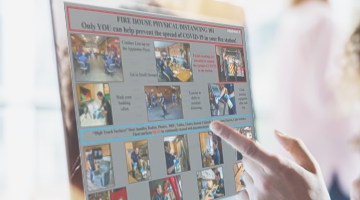
Documents to Download and Read, Videos to View
- LACoDPH – COVID-19 Best Practices from On-Site Assessment at the Firehouses/Ambulance Quarters-Shared Living Houses
- LACoFD – Redoubling Our Efforts to Keep Each Other Safe – OA-19
- LACoFD – Keeping Each Other Safe Guidelines
- LACoFD – Fire House Physical Distancing 101
- LACoFD – COVID-19 ICP and Rehab Directives
- LAFD – COVID-19 Hygiene Precautions Video
- CDC – What Firefighters and EMS Providers Need to Know about COVID-19
- CDC/NWCG – Prevention and Management of COVID-19 During Wildland Fire Operations
- CA STAC – COVID-19 – Precautions, Protocols, and PPE For First Responders
- Updated HHS/ASPR – COVID-19 Response Guidance Update, 28 August 2020
- Updated DHS – Master Question List for COVID-19, 4 August 2020
RTG Behavioral Wellness: Identify and Cope with Stress
Stress ad behavioral health issues are significant factors in firefighter’s wellness. They impact physical fitness and present a serious risk to other-on-the-job hazards. Behavioral health challenges do not indicate weakness or unfitness. Lifelong health and wellness depends on self-awareness and taking positive action to manage stress.
View this important training.
RTG Behavioral Wellness: Compassion Fatigue and PTSD
Fire service work grows more demanding each year. Behavioral health issues among firefighters are also increasing. Higher suicide rates among firefighters have been observed. More than 100 US firefighter suicides occur each year, more than line-of-duty deaths. Behavioral health issues present significant risks to firefighter health and well-being.
View this important training.
Firefighters, Mental Health, and PTSD
In a national anonymous survey conducted by the IAFF and NBC, 7,000 respondents revealed a culture where many are trying to cope with mental health and PTSD. 95% experience critical stress on the job, 77% have unresolved issues, 65% have unwanted memories of bad calls, and 27% say the stress has led to substance abuse. Most fear seeking help or talking about their stress. But help is available.
How to Stay Mentally Healthy – Learn More
Everyone experiences stress. Sometimes it can help you focus and get the task at hand done. But when stress is frequent and intense, it can strain your body and make it impossible to function. Finding effective ways to deal is crucial to living well. The National Alliance on Mental Illness provides practical suggestions to help you manage stress and stay mentally healthy.
Warning Signs – Learn More
Most fire fighters and paramedics are exposed to potentially traumatic events as a normal part of their jobs. Following certain bad calls, some may have a strong reaction. They replay the event in their minds, have difficulty sleeping or experience strong, upsetting thoughts and feelings. By talking with others and engaging in self-care, these common stress reactions often subside over time. But what are the signs of symptoms of a level of stress that may indicate a deeper problem? Learn more at IAFFRecoverycenter.com
Depression and Stress Management – Learn more
Stress is the body’s response to physical or emotional demands. Emotional stress can play a role in causing depression or be a symptom of it. A stressful situation can trigger feelings of depression, and these feelings can make it more difficult to deal with stress. Stress management techniques are useful in coping with depression. Stress relief can also help prevent depressive symptoms from developing. Healthline brings together reputable articles and documents that provide helpful tips and anecdotes for good mental health and stress management.
Reputable Stress Management Sites & Resources
- The Treatment Needs of Our Firefighters & First Responders
- 8 Ways for First Responders to Reduce Stress
- Surviving the Job: Emotional Self Care for First Responders
- Crisis Mode: 911 Operators Suffer in Silence
- PTSD and Addiction: The Connection Between Trauma and Drug Addiction
- Addiction Guide for Colleagues